If you’ve ever stood on an escalator, you might’ve felt that smooth, steady glide and not given a single thought to all the tiny, hidden parts working behind the scenes to keep you safe. I’ve been in the escalator parts supply game for over a decade, and let me tell you—safety systems aren’t just random add-ons; they’re the backbone that keeps these moving staircases reliable, every single time someone steps on. When someone reaches out to me to source replacement parts, their first question almost always ties back to safety, so I break it down in plain, no-jargon terms for them. Today, I want to walk you through the main components of an escalator’s safety system, straight from someone who supplies the stuff that actually makes it work. Escalator Parts

First off, let’s start with the most obvious (but still super important) safety feature: step chains. Most people don’t notice them, because they’re tucked under the steps, wrapping around the top and bottom sprockets. These aren’t your average bike chains—they’re heavy-duty, engineered to hold thousands of pounds of weight, and they have to align perfectly with every step’s track. If a step chain breaks or slips, that’s when steps can go out of sync, and someone’s foot or clothing can get caught in the gap between steps and the sidewall. That’s why when I supply step chains, I emphasize that they’re not just a moving part—they’re a safety critical component. Every chain link is tested to resist wear, corrosion, and tension, because a failed chain is a huge hazard. I’ve had clients tell me they skipped a chain replacement once and ended up with a costly shutdown, and that’s exactly why I stress checking these regularly.
Next up, step level sensors. These are tiny, often overlooked devices that make sure every step stays flat at both the top and bottom landings, right when you’re stepping on or off. Think about it: if a step tilts up at the bottom, your foot can slip, or if it’s misaligned with the floor gap at the top, you could trip. Step level sensors monitor the height of each step as it loops around the sprockets, triggering an immediate shutoff if a step is more than a fraction of an inch out of place. I get calls all the time from maintenance teams who say a sensor went bad, so their escalator kept running with a misaligned step—those sensors are like the escalator’s guard at the door. No fancy tech, just consistent, reliable checks that prevent so many preventable accidents.
Then there’s the comb plate and comb teeth safety switch. The comb plate is that slanted metal piece at the top and bottom, with little teeth that interlock with the notches on each step. If something—like a shoe lace, a toy, or even a kid’s jacket—gets caught between the comb teeth and the step, that’s where the safety switch kicks in. The comb plate isn’t just a metal cover; it’s connected to a microswitch that’s wired to stop the entire escalator in less than a second. I’ve seen countless near-misses where a loose shoelace got caught, and the comb switch tripped before it pulled the lace tight. If that switch fails, the escalator keeps running, and that small snag can turn into a serious injury. That’s why we supply high-quality comb switches, not the cheap off-brand ones—cheap switches can stick or fail to trigger, which is a disaster waiting to happen.
Moving on to handrail safety systems. The handrail is what most people grab when they’re on an escalator, so it makes sense there are safety features tied directly to it. First, there’s the handrail tension sensor. If the handrail gets loose, frayed, or slips out of its track, that sensor detects the change in tension and shuts the escalator down. Then there’s the handrail speed monitor—this one is super important. The handrail has to move at the exact same speed as the steps, right? If the handrail is slower, people lean forward to compensate and trip; if it’s faster, they stretch their arm and lose balance. The speed monitor checks the handrail’s speed against the step chain’s speed every few milliseconds, and if there’s even a 5% difference, the escalator stops immediately. I’ve had a client who had a handrail that stretched over time, and the speed monitor kept tripping until they replaced the handrail and the sensor—total headache, but way better than someone falling.
Another key component is the emergency stop button (ESB). I don’t care how obvious this sounds, but it’s the most accessible safety feature for anyone on the escalator. It’s a big, bright red button, usually at both the top and bottom landings, and anyone can hit it if they see something wrong. Here’s the thing: those buttons aren’t just decorative—they’re wired directly into the escalator’s control circuit, no relays, so even if the main power goes out, the button still works. I’ve heard people say “I don’t want to hit it and shut down the escalator,” but trust me, it’s better to shut it down safely than risk an accident. A lot of replacement ESBs out there are low-quality, so they can get stuck or not trigger properly when pressed. That’s why when I supply these, I make sure they meet industry standards—if someone needs an ESB replacement, I tell them to don’t cut corners here.
Then there’s the over speed governor and the chain brake. Wait, I know that sounds like industrial jargon, but let me break it down simply. If something goes really wrong—like the escalator’s motor fails, and it starts running way too fast, or the step chain snaps, and the steps keep moving unregulated—the over speed governor detects the excessive speed and triggers a mechanical brake to stop the escalator. This isn’t an electronic stop; it’s a physical brake that clamps onto the drive mechanism, so it works even if all the power is out. I’ve only seen this used a handful of times in my career, but when it is, it’s the difference between a minor mishap and a major incident. The chain brake is similar, but it’s specific to the step chain—if the chain breaks or derails, the brake locks into the chain links to stop the steps from free-falling. These are heavy-duty parts, and they have to be inspected regularly, which is why a lot of maintenance teams reach out to me for replacement governors or brakes when they’re due for a full safety check.
We can’t forget about gap guards and anti-trap devices. The gaps between steps and the side panels, and between steps and the comb plate, are the biggest places where clothing, shoes, or body parts get caught. Gap guards are the plastic or metal strips along the side of the step, designed to narrow that gap as much as possible, and some have sensors that trigger a shutoff if something gets pinched in the gap. Anti-trap devices, specifically for the side gaps, are tiny rollers that rotate if something touches them, sending a signal to stop the escalator. I’ve had clients replace cheap gap guards with ones we supply, and they say the number of complaints about pinched items dropped almost overnight. A lot of old escalators have gaps that are way too big, and replacing the gap guards is an easy, cost-effective safety upgrade that makes a huge difference.
Finally, the control panel and safety interlocks. The control panel is the “brain” of the escalator’s safety system, wiring all these components together so they work in sync. The safety interlocks are the small switches that keep doors, covers, and access panels shut tight. If someone tries to open the side panel to the drive mechanism while the escalator is running, the interlock switch triggers a shutoff immediately. This is a big one for maintenance workers—they never want someone to open a panel while the escalator is moving, so those interlocks are non-negotiable. We supply interlock switches that are built to withstand heavy use, because a faulty interlock can lead to someone getting hurt during service.
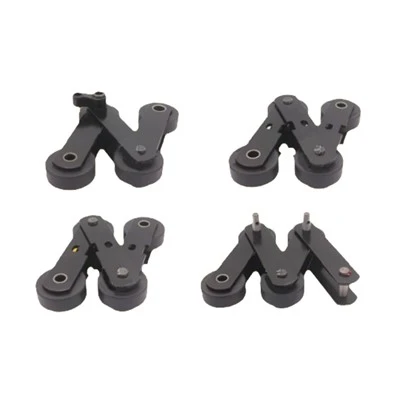
At the end of the day, every part of an escalator’s safety system is designed to react fast, detect issues before they turn into accidents, and keep the escalator from moving when something’s wrong. As someone who’s been supplying these parts for years, I know that even a small, cheap component can fail if it’s not up to standard. If you’re a maintenance team, building owner, or anyone who needs to keep an escalator running safely, don’t wait for a part to break before you upgrade. Reach out to talk through what you need, whether it’s step chains, comb switches, ESBs, or any other safety component—we’ve got you covered with parts that meet all industry standards and are built to last.
Elevator Door System References
- American National Standards Institute (ANSI). Safety Requirements for Escalators and Moving Walks. ANSI A17.1, 2021.
- Elevator Industry, Inc. Escalator Safety Maintenance Guidelines, 2022.
- International Standard Organization (ISO). Safety of Elevators and Escalators – Part 1: Escalators and Moving Walkways. ISO 14798:2019.
- National Elevator Industry Educational Program (NEIEP). Escalator Component Safety Inspections Manual, 2020.
Huzhou Kenai Elevator Technology Co., Ltd.
As one of the most professional escalator parts manufacturers and suppliers in China, we also support custom service. We warmly welcome you to wholesale advanced escalator parts made in China here from our factory. For more cheap products, contact us now.
Address: No. 6666, Qianghua West Road, Dongqian Street, Nanxun District, Huzhou City, Zhejiang Province, China
E-mail: info@kenailift.com
WebSite: https://www.kenaielevator.com/
