If you’ve ever ordered a new appliance, a piece of furniture, or even a bulky online shipment, chances are it was nestled in a bed of EPS (expanded polystyrene) packaging—those light, white, crumbly blocks that cushion goods and prevent damage during transport. For years, EPS has been a go-to protective packaging material because it’s lightweight, cost-effective, and highly impact-resistant. But there’s a lingering question in the sustainability space: can this ubiquitous packaging material actually be recycled with modern EPS recycle systems? As a supplier of EPS recycle systems, I get this question every week—from small businesses drowning in packaging waste to large corporations aiming to hit their zero-waste goals. The short answer is yes, but it’s not as simple as tossing EPS into your curbside bin. Let’s break down the science, the challenges, and what a properly configured EPS recycle system can really accomplish. EPS Recycle System
First, let’s demystify EPS itself. Unlike rigid plastics like PET or HDPE, EPS is made of 95% air and 5% polystyrene resin, expanded with pentane gas during manufacturing. That air content is part of what makes it so useful for packaging, but it’s also the root of most of the confusion around recycling. For decades, EPS was seen as “unrecyclable” because standard recycling processes for other plastics weren’t designed to handle its low density. A cubic foot of loose EPS weighs just a few ounces, so transporting it from collection points to processing facilities was prohibitively expensive—costs that often outweighed any value from the recycled material. But that’s where EPS recycle systems have evolved dramatically over the last 10 years, and that evolution has changed everything.
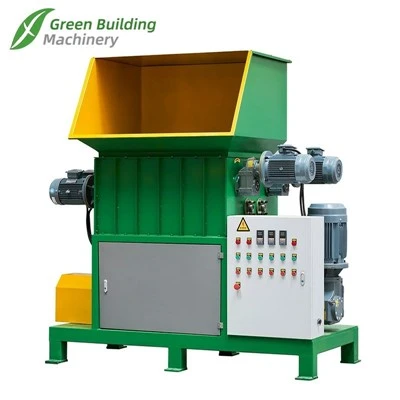
Let’s talk about how a modern EPS recycle system works, because understanding the process is key to seeing its potential. The core of any commercial EPS recycle system relies on a compactor and a densifier, two pieces of equipment that address EPS’s biggest flaw: its bulk. Loose EPS takes up way too much space, so the first step is to compact it. High-speed compactors use mechanical pressure to squeeze air out of EPS, reducing its volume by about 50%—from a bulky, lightweight pile to a smaller, denser block. But to get to a material that’s actually marketable for reuse, you need to go further. That’s where the densifier comes in. Densifiers apply extreme heat and pressure to compacted EPS, melting the polystyrene resin and squeezing out any remaining air and contaminants. The result is a solid, dense block of recycled polystyrene (rEPS) that’s roughly 50 times smaller than the original loose EPS.
This densified rEPS isn’t just a random lump of plastic. It’s a high-quality raw material that can be used to make new EPS packaging, picture frames, crown molding, garden edging, even desk accessories and toys. In fact, some of the largest EPS manufacturers in North America and Europe now use rEPS to produce new packaging, closing the loop entirely on the material. The science checks out: polystyrene is a thermoplastic, meaning it can be melted and reformed multiple times without significant degradation, as long as it’s processed correctly to remove contaminants like food residue, ink, or other plastics. That’s a critical point—contamination is the biggest risk in EPS recycling, not the material itself.
I’ve seen this play out firsthand with a client last year: a mid-sized electronics manufacturer that was sending 20,000 pounds of EPS packaging to landfills every month. They tried curbside recycling once, only to find their local program didn’t accept EPS because it couldn’t process it. They reached out to us, and we installed a small-scale EPS recycle system at their warehouse. Within six months, they were diverting 98% of their EPS waste from landfills, turning it into dense rEPS blocks that they sold back to a local EPS manufacturer for $0.25 per pound. That might not sound like much, but over the course of a year, that translated to $60,000 in revenue, plus a 70% reduction in their waste disposal costs. The ROI on the system paid for itself in just 18 months, and they’ve since expanded the system to handle more waste from their new distribution center.
But let’s be honest—there are still barriers that keep some businesses from investing in EPS recycle systems. The first is contamination. If you toss EPS that’s coated in food grease, adhesive residue, or even a piece of cardboard or tape into a recycle bin, it can ruin an entire batch of rEPS. Modern systems have filtration and cleaning stages (like hot water baths and friction washers) that remove most contaminants, but they’re not perfect. That’s why we always work with clients to develop a simple sorting protocol: keep EPS separate from other materials, wipe off large food residue, and remove tape and labels before processing. It’s a small step that makes a huge difference in the quality of the recycled material.
Another barrier is the myth that EPS is too flimsy or low-value to recycle. That’s outdated. The global market for recycled polystyrene has grown 12% annually since 2020, according to the Plastics Industry Association, driven by demand from packaging manufacturers and construction companies (who use rEPS for insulation). Densified rEPS is consistent in density and quality, which makes it a viable alternative to virgin polystyrene for many applications. Virgin polystyrene prices fluctuate with oil costs, while rEPS is a stable, local supply that many brands prefer for their sustainability claims.
I also get asked a lot: can a small business or a startup afford an EPS recycle system? The answer is yes, as long as you size the system to your waste volume. We design systems for every use case, from small operations that process 500 pounds of EPS a month to large manufacturers that handle 100,000 pounds a month. For a small e-commerce business or a local furniture store, a compact system with a compactor and a small densifier can cost between $15,000 and $30,000, and the savings on waste disposal plus revenue from selling rEPS typically pays for it within 2-3 years. For larger operations, modular systems let you start small and add capacity as your waste volume grows, so you don’t have to invest in more equipment than you need upfront.
There’s also the question of end markets. Even if you recycle EPS, what do you do with the final product? That’s a question we help clients solve from day one. We work with a network of buyers across North America and Europe who are actively purchasing rEPS, so we can help you connect to a reliable market before you even install the system. Last year, we partnered with a group of three small appliance retailers in the Pacific Northwest to install shared EPS recycle systems at their regional warehouses. They split the cost of the system, pooled their EPS waste, and sold the rEPS to a local picture frame manufacturer, earning each store an extra $10,000 a year while diverting 90% of their EPS waste from landfills. That’s the kind of collaborative solution that makes EPS recycling accessible to even the smallest businesses.
Of course, it’s important to acknowledge that not all EPS is created equal. Some EPS, like that used for disposable coffee cups or takeout containers, is more contaminated with food residue and often mixed with other materials, making it harder to recycle. But the EPS used for protective packaging—blocks, inserts, custom molds—are typically much cleaner, and that’s where the majority of EPS recycling opportunity lies. There are also companies working on chemical recycling processes for contaminated EPS, which can break down the polystyrene into its original chemical components and make it reusable for any application. While chemical recycling is still emerging, it’s a promising development that will expand EPS recycling capabilities even further in the next decade.
As someone who’s been designing and installing EPS recycle systems for 12 years, I’ve seen the industry go from writing off EPS as unrecyclable to being one of the most promising areas of plastic waste reduction. The key shift wasn’t just new technology—it was understanding that EPS’s density problem was solvable, and that with a properly designed system, the value of recycled polystyrene makes the process worth it. I’ve also seen the impact on businesses beyond just the bottom line: a medical supply client we worked with recently told us that using their rEPS as part of their packaging helped them meet their Science Based Targets, which in turn helped them win three new major clients in the pharmaceutical space. Sustainability isn’t just a buzzword for many businesses—it’s a competitive advantage, and EPS recycling is a big part of that.
If you’re still on the fence about whether an EPS recycle system is right for your business, here’s the reality: continuing to send EPS to landfills is not an option for most businesses that want to stay relevant in a world where consumers and regulators are demanding more sustainable practices. EPS makes up about 2% of municipal solid waste in the U.S., but it’s responsible for a disproportionate amount of plastic waste because of its low density and slow degradation. Every pound of EPS you recycle is one pound that doesn’t end up in a landfill, or worse, in an ocean or waterway.
I’ve talked to hundreds of business owners who thought EPS recycling was impossible, only to be surprised by how simple and cost-effective it is with the right equipment. It’s not a one-size-fits-all solution, and it does require a small investment, but the return—financial, environmental, and reputational—far outweighs the cost. If you’re ready to stop wasting your EPS packaging and start turning it into a valuable resource, we can help you design a system that fits your needs, your budget, and your sustainability goals. Reach out to our team to learn more about how an EPS recycle system can work for your business.
EPS Cornice Moulding Machine References
- Plastics Industry Association. (2023). Global Recycled Polystyrene Market Report.
- European Plastic Recyclers Association. (2022). EPS Recycling Best Practices and Case Studies.
- U.S. Environmental Protection Agency. (2021). Municipal Solid Waste Characterization Report.
- Sustainable Packaging Coalition. (2023). EPS Circular Economy Framework.
- International Solid Waste Association. (2022). EPS Recycling Technology Update.
Jinhua Green Building Imp. and Exp. Co., Ltd.
Jinhua Green Building Imp. and Exp. Co., Ltd. is one of the most reliable EPS recycle system manufacturers and suppliers in China, also supports customized service and 1 year warranty. Please feel free to wholesale bulk CE approved EPS recycle system from our factory. Welcome to contact us for quotation and free sample.
Address: No. 2 Huilan Road, Lanjiang Street, Lanxi City, Jinhua City, Zhejiang Province
E-mail: sally@cngreenindustry.com
WebSite: https://www.greenepsmould.com/
