If you’ve ever stood in a drugstore aisle staring at rows of face creams, serums, or body butters, you’ve probably picked up a jar and wondered: why are some tiny enough to fit in a lip gloss case, and others big enough to hold a week’s worth of hand cream? As someone who’s spent the last 7 years running a cosmetic jar supply company (shoutout to all the brand owners I’ve worked with over the years), I get how confusing the capacity of these jars can be—especially when you’re trying to price a product, calculate shipping costs, or pick packaging that matches your brand vibe. No one wants to accidentally order jars that are way too big (wasting money on unused storage space) or way too small (so your customers run out before they feel like they got a good deal). Cosmetic Jar
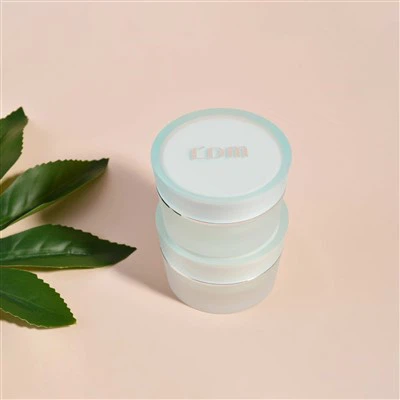
Let’s break down the common ranges, why they matter, and which ones show up most often in products you probably use every day. First, a quick note: cosmetic jar capacities are almost always measured in milliliters (mL) or fluid ounces (fl oz) — and to save you the math, 1 fl oz is roughly 30 mL. That’s a rule of thumb I still use when a client calls me panicking and goes “wait, did I order 1 oz or 10 mL?” (spoiler: that’s only one-third, don’t do that).
Starting with the tiny ones — these are the “travel size” or “sample” jars, the ones you toss in a gym bag or a weekend getaway carry-on. Most of these fall between 2 mL and 15 mL (0.07 fl oz to 0.5 fl oz). I see these used for two main things: product samples (like a pea-sized dollop of eye cream or a mini face mask to test before buying the full size) and actual mini products, like solid lip balms, cuticle balms, or mini eye gels. What’s cool about these is that they’re super versatile — you can get them in squeezeable tubes, screw-top lids, or even ones with a small spatula built right into the lid (perfect for face masks that need that extra scoop). A lot of new brand owners start here, too, because they’re cheap to order, lightweight to ship, and great for testing demand. I once had a brand that only made 5 mL mini face masks as a side gig; they sold so well on Instagram that they quickly moved up to 30 mL jars for their full size product. That’s the power of the tiny jar.
Next, the mid-range jars — this is where most face creams, body butters, and serums live. The most common capacities here are 15 mL (0.5 fl oz), 30 mL (1 fl oz), 50 mL (1.7 fl oz), and 100 mL (3.4 fl oz). Let’s go through each: 15 mL is often the “mini full size” for products like eye creams or tinted moisturizers — not as tiny as a sample, but small enough that customers can finish it in a month or two if they’re using it daily. 30 mL is the workhorse for a lot of indie brands; I can’t tell you how many times a founder has told me “we make our best-selling moisturizer in 30 mL jars.” It’s the sweet spot where it’s not too expensive for a customer to buy, and not so small that they feel like they’re overpaying. 50 mL is perfect for richer products, like night creams or hair masks that are thicker and don’t need as much product per use. And 100 mL is the biggest in this mid-range, usually for products you use daily, like body lotions, face cleansers (the solid kind, not liquid), or larger face masks. The thing about mid-range jars is that they come in all styles — frosted glass, matte plastic, clear acrylic, even ones with gold or silver lids to make them look premium. That’s why they’re so popular; you can dress them up or down to match your brand.
Then there are the large jars — these are the “value size” or “professional size” ones. Most of these are 150 mL (5 fl oz), 200 mL (6.8 fl oz), 250 mL (8.5 fl oz), and even 500 mL (17 fl oz). I mostly see these used for body butters, bath salts, face scrubs, or professional salon products — stuff that’s meant to last months, not weeks. A lot of boutique beauty brands also use these for their signature products, since a big, elegant jar on a vanity feels like a luxury purchase. The catch here is that large jars are heavier and bulkier, so shipping costs can add up. I always tell clients ordering 250 mL or 500 mL jars to think about where they’re selling — if it’s only local, no problem, but if they’re shipping across the country, they might want to offer a “bulk discount” to offset the shipping for customers. I once had a client who sold 500 mL body scrubs; their customers loved the value, but once they started shipping nationwide, they had to raise the price by a dollar to cover the extra cost of the big jars. It’s a small tweak, but it made a huge difference in their profit margins.
Wait, but what about “odd sizes”? Like, I’ve had clients ask for 75 mL jars or 125 mL jars. Those are totally custom, but they’re way less common than the ranges I listed. Most big brand suppliers stick to the standard sizes because they’re easier to manufacture and cheaper to produce. If you’re a small brand testing a new product, I usually recommend sticking to the common ranges first — it’ll save you money on minimum order quantities (MOQs) and make it easier to find packaging finishes that fit. MOQs are another thing I should mention: the capacity of a jar affects the MOQ, too. Tiny 2 mL samples have super low MOQs (like 1,000 or even 500 pieces, which is perfect for new brands), while large 500 mL jars have higher MOQs (usually 500 or 1,000, since they’re bigger and take more materials to make).
I also get a lot of questions from brand owners about how to pick the right capacity. Here’s my go-to advice: first, think about how often your customer will repurchase your product. If it’s a face cream someone uses daily, a 30 mL or 50 mL jar is perfect — they’ll finish it in about 2-3 months, which is a good time to remind them to reorder. If it’s a once-a-week body scrub, a 200 mL jar is better, because it lasts longer. Then, think about your brand vibe: a luxury brand might use frosted glass 100 mL jars for their moisturizer, while a budget indie brand might use matte plastic 50 mL jars for the same product. Both work, the capacity just matches what the customer expects.
And let’s be real, a lot of people don’t realize that cosmetic jars aren’t all just cylinders. You get square jars, round jars, hexagonal jars, even ones shaped like hearts — but the capacity still sticks to the ranges I talked about. A square 30 mL jar is the same amount of space inside as a round 30 mL jar, it just looks different. That’s a common misconception I see online; a lot of new brand owners post on forums going “wait, my 30 mL square jar feels smaller than my old round one!” No, it’s not — it’s just the shape. That’s why knowing the standard capacity ranges is so important, it keeps you from making silly mistakes like that.

If you’re a brand owner who’s still not sure what capacity to pick, or you need help ordering jars for your next product launch, hit me up. I’ve worked with hundreds of brands, from one-person startups to established beauty lines, and I can help you figure out what size makes sense for your product, your budget, and your customers. Don’t overcomplicate it — just remember the ranges: tiny (2-15 mL), mid (15-100 mL), and large (150-500 mL), and you’ll be good to go.
Deodorant Container References:
- Personal communication with cosmetic packaging manufacturers, 2017-2024
- “Cosmetic Packaging Market Report,” Grand View Research, 2023
- “Packaging Standards for Cosmetics,” U.S. Food and Drug Administration, 2022
- Interview with indie beauty brand founders, 2021-2024
- “Global Cosmetic Jar Industry Analysis,” Statista, 2023
Shaoxing Longderm Plastic Co., Ltd.
Shaoxing Longderm Plastic Co., Ltd. is one of the leading cosmetic jar manufacturers and suppliers in China. We warmly welcome you to wholesale custom made cosmetic jar from our factory. For more cheap products, contact us now.
Address: No. 55, Tongmingnan’an Road, Yuxian Village, Fenghui Town, Shangyu District
E-mail: hello@ldmpac.com
WebSite: https://www.ldmpackaging.com/
