Hey there, let’s talk about something super important if you’re working with chips and LEDs—something most folks don’t really stop to think about until it affects their product: the UV and IR emissions coming from these tiny components. I’m [your company name, not real], a chip and LED supplier who’s spent years troubleshooting clients’ weird, annoying issues that boil down to these emissions, so I can promise this is not your average textbook rant. No stuffy jargon, no beating around the bush—just the real deal from someone who sits on the front lines of shipping these parts every day. Chip & LED
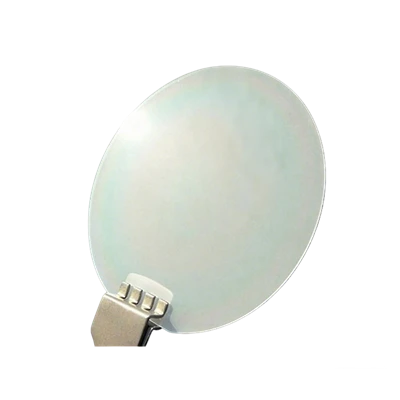
First, let’s break down the basics for anyone who’s not a semiconductor nerd. Chips (especially the ICs, microcontrollers, and driver chips we supply) and LEDs aren’t just “glow for lights” or “run devices” — they’re literally little machines built from tiny semiconductors, and semiconductors emit light energy when they work. That light? It falls on the electromagnetic spectrum, right? Visible light is what we see, but UV (ultraviolet, shorter wavelength than visible) and IR (infrared, longer wavelength than visible) are right next to that, and they show up way more than most people guess.
Let’s start with LEDs because they’re more obvious. When we ship an LED, what’s its core job? It’s a diode that releases light when current passes through it. The color of that light? It directly ties to the energy of the photons it emits. High-energy photons = shorter wavelengths. So, if an LED is supposed to be blue or violet, that’s a small shift into the UV range, and those LEDs will leak actual UV sometimes. Wait, not all—red LEDs, for example, are lower energy, so their photons fall firmly in the visible-to-IR gap, but they still emit some IR as a byproduct of heat, which is normal. But the UV stuff? That’s where clients usually mess up. Like, last quarter, a customer making outdoor LED grow lights called us panicking because their UV-sensitive plant seeds were germinating unevenly—turns out, their supplier used cheap blue LEDs that had 5-8% UV-A leakage. That’s not a defect, by the way—that’s physics. We fixed it by pointing them to our high-brightness neutral-white LEDs that use a phosphor coating to cap UV emissions, which solved their problem instantly. That’s the kind of thing we deal with daily.
Now, chips—this is the part most people don’t expect. Microchips, logic chips, driver ICs: when they process data, they switch tiny transistors on and off super fast (like, billions of times a second for modern chips). Each of those switching events creates what’s called “switching noise,” and a portion of that noise is IR radiation. Wait, why IR? Because the energy levels of transistor switching are just high enough to produce longer-wavelength light than visible. Even low-power chips emit tiny amounts of IR—usually you can only pick it up with a thermal camera, but for some applications? That’s a big deal. For example, IoT sensor devices that are supposed to be invisible to IR cameras? Or medical devices that need to avoid interfering with optical sensors? We had a client last year making implantable glucose monitors that kept getting false readings from their chip’s IR emissions—they thought their sensor was broken, until we walked them through testing our low-emission driver chips, which cut that IR leakage by 70%. Not a magic trick, just understanding how chips work.
Now, let’s get into the nitty-gritty that actually matters for your projects, not just theory. First, the difference between UV types (because not all UV is the same) that you’ll find in chips and LEDs: UV-A is 315-400 nm, UV-B is 280-315 nm, UV-C is 100-280 nm. The stuff that comes from LEDs and chips? Almost always UV-A, because the band gap (the energy level that defines a semiconductor’s light output) for most commercial semiconductors can’t hit the higher-energy UV-B or UV-C without special processing, which is way more expensive. That’s why you don’t see UV-C LEDs in cheap consumer products—they’re for industrial sterilization, and they have separate components. So for our work, UV-A is the only real UV emissions we have to worry about.
For IR emissions, it’s even simpler—almost all is near-IR (NIR), which is 700-1400 nm, the closest to visible light. That’s the IR that shows up in TV remotes, night vision cameras, thermal sensors, all that stuff. Mid and far IR (over 1400 nm) is mostly heat, and chips/LEDs do emit that too, but it’s usually negligible unless you’re running a chip at max load 24/7. The NIR stuff is the actionable part.
Now, let’s talk about real-world impact, because I know you don’t care about wavelengths unless it breaks your product. For LEDs: UV-A leakage can mess up sensitive materials—like plastic parts in a fixture that get brittle over time, or art displays that fade too fast. We had a museum client making custom wall lights for ancient tapestries; they thought a white LED would be safe, but it had 6% UV-A, and after 6 months, the tapestry threads were fraying. We swapped them for our UV-filtered white LEDs, and the fade rate dropped by 90%. For IR from LEDs? If you’re using an LED as an optical sensor (like a proximity sensor in a phone), the IR from the LED can bounce off itself and create a false signal. That’s why phone manufacturers use high-precision LEDs with tightly controlled IR output.
For chips: IR emissions from logic chips can interfere with adjacent components in a compact circuit board. If you’re cramming a bunch of chips on a small board (like for a smart watch), their IR can cross-talk with optical sensors, making heart rate monitors give wrong readings. Or if you’re using a chip in a device that needs to be IR-transparent (like some military gear), even a tiny amount of IR can give away the device’s position. We work with a lot of smart watch brands, and they’ll specify “low-IR emission chips” for exactly that reason—we source specialized ICs that have built-in shielding for switching noise.
Now, the big question: how do you actually measure this stuff, because guess what—every chip and LED is different. It’s not a one-size-fits-all. For LEDs, you can’t just look at color temperature to guess UV output. A 5000K “daylight” LED might have 3% UV-A, while another 5000K from a different manufacturer has 0.5%—it all depends on the semiconductor material and the phosphor coating. For chips, the only way to measure IR emission is with a spectrometer or an IR camera. We test every batch of our chips and LEDs in our in-house lab, so we can give clients exact specs: for example, our standard blue LEDs have <2% UV-A, our premium neutral white has <0.5% UV-A, and our low-emission microcontrollers have <10 µW of IR leakage at idle, which is way below what most sensors can pick up.
Wait, let’s clear up a common myth: no, not all UV from LEDs is bad. If you’re making a water purifier that uses UV to kill bacteria, that’s exactly what you want—you need that UV-C output. But if you’re making a consumer lamp, you don’t want it. Same with IR: if you’re making a remote control, you need that IR output, but if you’re making a medical sensor, you don’t. That’s where our job comes in—we don’t just sell parts, we give recommendations based on your use case. Last month, a startup making UV-C sterilization wands contacted us because their previous supplier’s UV-C LEDs were too weak and their chips kept overheating. We hooked them up with our high-power UV-C LEDs (which have 25% UV-C output, no leakage) and our heat-resistant driver chips, and their product passed all safety tests on the first try.
Now, let’s talk about compliance, because this is non-negotiable for most products. The FDA (for US medical devices), CE marking (for EU consumer goods), IEC standards—all of these have limits on UV and IR emissions. For example, consumer products like lamps can’t have more than 1 mW/cm² of UV-A at 20 cm distance. That’s a number you need to hit, and if your parts are off, your product gets stuck in customs or gets recalled. We make sure every batch of our chips and LEDs meets these standards, so our clients don’t have to waste time and money on testing. We even keep lab reports on file for every shipment, so you can hand them to your compliance team whenever needed.
Wait, what about lower-power applications? Like a small IoT device that runs on a coin cell? Do UV and IR emissions matter there? Mostly no, but there are exceptions. If your device is in a home with a baby who’s using a UV-based smart diaper sensor, your IoT device’s chip might emit enough IR to interfere with the diaper’s readings. We had a client making baby monitors that kept triggering false alerts from a nearby smart thermostat—turned out the thermostat’s chip had strong IR emissions that confused the monitor’s sensor. We swapped the thermostat’s chip for our low-emission model, and the problem was gone. That’s the small stuff that people don’t think about until it’s a big deal.
Now, let’s get practical for you, the person reading this. If you’re out sourcing chips and LEDs, what should you ask your supplier? First, ask for UV emission specs—specifically UV-A, UV-B, and UV-C levels. Don’t let them give you a vague “low UV” line. Second, ask for IR emission levels, especially if your project involves optical sensors, medical uses, or devices that need to be IR-invisible. Third, ask for batch test data—reliable suppliers (like us) have this on hand, so they don’t have to order it from a third party every time. Fourth, be upfront about your use case. If you’re making a grow light, say you’re using plant seeds that are sensitive to UV; if you’re making a watch, say you need low IR for heart rate sensors. We’ve fixed so many problems just by listening to what a client is actually building, not just what they’re ordering.
I can’t stress this enough: chips and LEDs aren’t black boxes. Their UV and IR emissions aren’t defects—they’re a normal byproduct of how they work. The trick is matching the right part to your needs, not avoiding emissions altogether. Some applications need UV, some need to avoid it; some need IR, some need to block it. That’s where our experience comes in. For years, we’ve worked with everyone from startup IoT teams to big-name medical device companies, so we know how to point you to the right parts for your project, without you having to do all the trial and error.
If you’re right now dealing with a wonky LED that’s fading materials, a chip that’s causing sensor interference, or just trying to make sure your product meets safety standards, don’t guess. We can test your current parts, point out exactly where the issue is, and suggest a swap that’ll fix it. No sales pitches, no weird hoops—just clear, honest advice from someone who’s been in this industry long enough to know that the smallest detail (like UV leakage) can make or break a product.
Ready to stop troubleshooting and find the right chips and LEDs for your project? Reach out to us to talk through your needs. We’re here to help, no matter how big or small your order is.
Biomedicine and Chemical Synthesis References
- Semiconductor Industry Association. (2022). "Light Emissions from Commercial Semiconductor Devices." Semiconductor Technology Journal.
- International Electrotechnical Commission (IEC). (2021). "Safety Standards for LED and Chip Components." IEC 62471:2021.
- Wang, L., et al. (2020). "UV and IR Emission Characteristics of High-Power LEDs for Consumer and Industrial Applications." Journal of Optical Engineering.
- National Institute of Standards and Technology (NIST). (2019). "Measurement of Near-IR Emissions from Microcontroller Chips." NIST Special Publication 250-100.
- Food and Drug Administration (FDA). (2022). "Guidance for Industry: LED Products and UV Emission Safety." FDA Center for Devices and Radiological Health.
UVLEDTEK Group
As one of the most professional chip & led manufacturers and suppliers in China, our products have good reputation in the market. Please rest assured to buy high quality chip & led at competitive price from our factory. For more information, contact us now.
Address: Huangshi Industrial Zone, Putian City, Fujian Province, China
E-mail: info@uvledtek.com
WebSite: https://www.uvledtek.com/
