Hey there! As a supplier of air-cooled evaporators, I often get asked if these nifty devices can be used in high-altitude areas. It’s a great question, and in this blog, I’m gonna break it all down for you. Air Cooled Evaporators
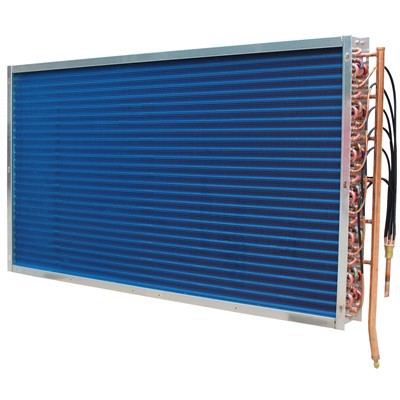
First off, let’s talk about what air-cooled evaporators are. They’re basically heat exchangers that use air to cool a refrigerant. In a nutshell, they take the heat from the refrigerant and transfer it to the surrounding air. This is super useful in a bunch of industries like food storage, HVAC systems, and industrial refrigeration.
Now, high-altitude areas have some unique challenges. One of the biggies is the lower air density. As you go up in altitude, the air gets thinner. That means there are fewer air molecules per unit volume, and this can have a big impact on how air-cooled evaporators work.
With less air density, the amount of heat that can be transferred from the refrigerant to the air is reduced. See, the cooling process depends on the air being able to absorb and carry away the heat. When there are fewer air molecules, the heat transfer rate drops. This can make the evaporator less efficient and might even cause it to work harder to achieve the same cooling effect.
Another issue is the lower ambient temperature in high altitudes. You’d think that cooler air would be better for cooling, right? Well, it’s not that simple. Cold air can sometimes be too dry, and this lack of humidity can affect the performance of the evaporator. Dry air doesn’t absorb heat as well as slightly moist air, and it can also lead to more ice formation on the evaporator coils. Ice build-up is the enemy of an evaporator because it acts as an insulator, reducing the heat transfer rate even further.
But here’s the good news: air-cooled evaporators can still be used in high-altitude areas, but you gotta make some adjustments.
One key adjustment is to increase the size of the evaporator. A larger evaporator has a bigger surface area, which means there’s more space for heat transfer. Even with the lower air density, a bigger evaporator can still manage to transfer enough heat to cool the refrigerant effectively.
We also need to pay attention to the fan design. The fans on air-cooled evaporators are responsible for moving air over the coils. In high-altitude areas, we might need to use more powerful fans or adjust the fan speed to ensure that enough air is flowing over the coils. This helps to compensate for the lower air density and maintain an acceptable heat transfer rate.
In terms of dealing with the cold and dry air, we can use defrosting systems. These systems periodically melt the ice that forms on the coils, ensuring that the heat transfer process isn’t disrupted. There are different types of defrosting systems, like electric defrost and hot gas defrost, and we can choose the one that’s most suitable for the specific high-altitude application.
Let me share a real-life example. I had a customer in a mountainous region who was using an air-cooled evaporator for a small food storage facility. At first, they were having trouble keeping the temperatures low enough. After some analysis, we realized that the evaporator was too small for the high-altitude conditions. We replaced it with a larger model and upgraded the fans. We also installed an electric defrost system. After these changes, the evaporator started working like a charm, and the customer was really happy with the improved cooling performance.
So, to sum it all up, yeah, air-cooled evaporators can be used in high-altitude areas, but it’s important to take into account the unique challenges of these environments and make the necessary adjustments.
If you’re in a high-altitude area and you’re thinking about getting an air-cooled evaporator, or if you’re already using one and facing some issues, don’t hesitate to reach out. We’ve got the expertise and experience to help you find the right solution for your specific needs. We can customize the evaporators to fit your application perfectly and ensure that they work efficiently in your high-altitude setting. Whether it’s sizing, fan selection, or defrosting system design, we’ve got you covered. So, let’s start a conversation and see how we can make your cooling system work like a champ in those challenging high-altitude conditions.
Evaporator References
- ASHRAE Handbook: Refrigeration. American Society of Heating, Refrigerating and Air-Conditioning Engineers.
- "Heat Transfer in High-Altitude Environments" – Journal of Thermal Engineering.
Xiangshui Derkang Refrigeration Equipment Co., Ltd.
Address: No. 2, Xiaojian Town Entrepreneurship Park, Xiangshui County
E-mail: 505745223@qq.com
WebSite: https://www.xsderk.com/
