As a cable supplier, I’ve been asked countless times about the attenuation of a cable. Attenuation is a critical concept in the field of cable technology, and understanding it is essential for anyone involved in data transmission, telecommunications, or any application that relies on cables to carry signals. In this blog, I’ll delve into what cable attenuation is, why it matters, the factors that affect it, and how to manage it effectively. Cable
What is Cable Attenuation?
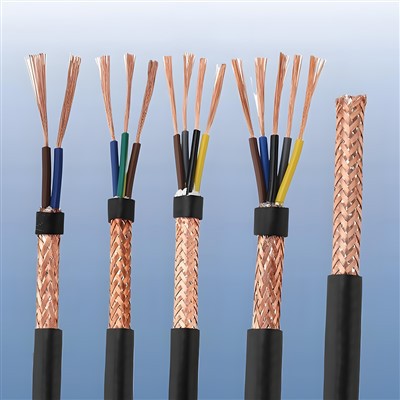
Cable attenuation refers to the reduction in the strength of a signal as it travels through a cable. When an electrical or optical signal is sent through a cable, it encounters resistance, capacitance, inductance, and other factors that cause the signal to lose power. This loss of power is measured in decibels (dB) and is typically expressed as a function of frequency and cable length.
For example, if you have a signal with a power of 100 watts at the beginning of a cable and it has a power of 50 watts at the end of the cable, the attenuation is 3 dB. A 3 dB loss means that the signal has lost half of its power. Attenuation is a natural phenomenon that occurs in all types of cables, including coaxial cables, twisted-pair cables, and fiber optic cables.
Why Does Attenuation Matter?
Attenuation is a crucial factor in cable performance because it can significantly impact the quality and reliability of a signal. When a signal is attenuated, it becomes weaker, which can lead to several problems:
- Signal Degradation: A weak signal is more susceptible to noise and interference, which can distort the signal and make it difficult to interpret. This can result in data errors, dropped calls, or poor video quality.
- Limited Transmission Distance: As the signal attenuates, it eventually reaches a point where it is too weak to be detected by the receiving device. This limits the maximum distance that a signal can be transmitted over a cable.
- Reduced Bandwidth: Attenuation can also reduce the effective bandwidth of a cable. Bandwidth refers to the range of frequencies that a cable can transmit. As the signal attenuates at higher frequencies, the usable bandwidth of the cable decreases.
Factors Affecting Cable Attenuation
Several factors can affect the attenuation of a cable. Understanding these factors is essential for selecting the right cable for your application and ensuring optimal performance.
- Cable Type: Different types of cables have different attenuation characteristics. For example, fiber optic cables generally have lower attenuation than copper cables, especially at higher frequencies. This is because light signals in fiber optic cables are less affected by resistance and interference than electrical signals in copper cables.
- Cable Length: Attenuation is directly proportional to the length of the cable. The longer the cable, the more the signal will attenuate. This is because the signal has to travel a greater distance, which increases the chances of it encountering resistance and other factors that cause attenuation.
- Frequency: Attenuation increases with frequency. Higher frequency signals are more susceptible to attenuation than lower frequency signals. This is because higher frequency signals have shorter wavelengths, which makes them more likely to be absorbed or scattered by the cable material.
- Cable Quality: The quality of the cable can also affect attenuation. High-quality cables are made with better materials and have better construction, which can reduce attenuation. For example, cables with a higher gauge (thinner wire) generally have higher attenuation than cables with a lower gauge (thicker wire).
- Environmental Conditions: Environmental conditions such as temperature, humidity, and electromagnetic interference can also affect cable attenuation. For example, high temperatures can cause the cable material to expand, which can increase resistance and attenuation. Electromagnetic interference can also cause noise and distortion in the signal, which can increase attenuation.
Managing Cable Attenuation
While attenuation is a natural phenomenon that cannot be completely eliminated, there are several ways to manage it effectively:
- Select the Right Cable: Choosing the right cable for your application is crucial. Consider the type of signal you are transmitting, the distance it needs to travel, and the frequency range. For example, if you are transmitting high-speed data over a long distance, fiber optic cables may be the best choice.
- Limit Cable Length: As mentioned earlier, attenuation is directly proportional to cable length. Therefore, it is important to limit the length of the cable as much as possible. If you need to transmit a signal over a long distance, consider using repeaters or amplifiers to boost the signal strength.
- Use High-Quality Cables: High-quality cables are made with better materials and have better construction, which can reduce attenuation. Invest in high-quality cables to ensure optimal performance.
- Proper Installation: Proper installation of the cable is also important. Make sure the cable is properly terminated and grounded to reduce the chances of signal loss. Avoid bending the cable too sharply or placing it near sources of electromagnetic interference.
- Monitor and Test: Regularly monitor and test the cable to ensure that it is performing properly. Use a cable tester to measure the attenuation and other parameters of the cable. If you notice any issues, take corrective action immediately.
Conclusion
In conclusion, cable attenuation is a critical concept in the field of cable technology. It refers to the reduction in the strength of a signal as it travels through a cable and can significantly impact the quality and reliability of a signal. Understanding the factors that affect attenuation and how to manage it effectively is essential for anyone involved in data transmission, telecommunications, or any application that relies on cables to carry signals.
Cable As a cable supplier, I am committed to providing high-quality cables that meet the needs of my customers. If you have any questions about cable attenuation or need help selecting the right cable for your application, please don’t hesitate to contact me. I would be happy to discuss your requirements and provide you with the best solutions.
References
- "Telecommunication Cabling Systems for Commercial Buildings," ANSI/TIA-568-C.
- "Fiber Optic Cabling Installation and Testing," by John Crisp.
- "Coaxial Cable Basics," by Andrew Corporation.
Hebei Liangyu Cable Co., Ltd.
We’re well-known as one of the leading cable manufacturers and suppliers in China, specialized in providing high quality customized service. We warmly welcome you to buy durable cable made in China here and get pricelist from our factory. For price consultation, contact us.
Address: Yanbai Industrial Zone, Jiajiakou Town, Ningjin County, Xingtai City, Hebei Province
E-mail: 18932990441@163.com
WebSite: https://www.liangyucable.com/
