If you’ve spent any time in FPV drone racing or freestyle flying, you know that the battery is the unsung hero that separates a smooth, fast run from a crash-filled, frustrating session. As someone who’s spent the last seven years supplying high-performance power packs for FPV pilots, one question I get asked more than any other is: “What is the actual capacity of the 150C FPV Lipo Black Series battery?” It’s a fair question—especially since so many brands market “high C rating” batteries without breaking down what that number actually means, or how it translates to real-world flight time and performance. Let me break this down from the perspective of someone who’s tested these batteries in my own drones, worked with pro racers, and tweaked our production process to make sure every pack delivers on its promises. 150C FPV Lipo Black Series

First, let’s get the basics straight: a 150C FPV Lipo Black Series battery is a lithium-polymer (LiPo) cell designed specifically for FPV use, with a 150C continuous discharge rating. That C rating refers to the battery’s ability to deliver current without overheating or failing—for LiPos, continuous discharge is the maximum current you can draw consistently for minutes at a time, which is non-negotiable for FPV, where quadcopters can pull 50A, 60A, even 80A depending on the build. Now, the capacity question is where it gets nuanced. When most people hear “150C battery,” they assume the C rating tells them everything about capacity, but that’s not true. C rating and capacity are related, but they’re separate specifications. The capacity is measured in milliampere-hours (mAh), and for our Black Series 150C packs, that’s a number we’ve tailored to balance power and runtime for the most common FPV applications.
Let’s start with the core: what our 150C FPV Lipo Black Series batteries actually offer in capacity. Unlike budget brands that cut corners by using thinner cell foil or lower-density chemistry to hit a high C rating at the expense of capacity, we engineer our packs to deliver both. For the most popular 5-inch FPV quads—the workhorse of both racing and freestyle—our 150C packs come in 4S (four cells in series) configurations, which are standard for most mid-to-high-end builds. The capacity here? Our best-selling 150C 4S packs are available in 1500mAh, 1800mAh, and 2200mAh. Wait, I know what you’re thinking: why three capacities for the same C rating? Because a racer who’s doing 3-minute laps around a track doesn’t need the same capacity as a freestyle pilot who’s doing 5-minute cinematic runs. The 150C rating remains consistent across all three, so each pack can handle the 50-70A draws those quads put out, but the mAh adjusts for flight time.
But let’s get beyond the numbers on a spec sheet. I’ve tested these packs myself in my own 5-inch freestyle quad, which I fly for about 20 hours a week, switching between the 1500mAh, 1800mAh, and 2200mAh versions. Let’s talk real flight time, not just the “theoretical” numbers you see on a brand’s website. The 150C 1500mAh pack, which is super light for speed-focused builds, gives me around 3 minutes of all-out 70A racing runs. That’s perfect for a track day, where every second counts and you don’t want an extra ounce of weight dragging you down. The 1800mAh is my go-to for casual freestyle: I get about 4 minutes of smooth, acrobatic flying—enough to pull off full barrel rolls, dives, and slow passes without worrying about the battery dying mid-trick. The 2200mAh, meanwhile, gives me roughly 5 minutes of flight time, which is ideal for cinematic FPV where I’m flying longer routes, capturing shots, and not pushing the quad to its absolute limit the whole time.
A lot of pilots ask if you can get a higher capacity in a 150C pack, like 2500mAh, and here’s the thing: you can, but it’s not practical for FPV. Why? Because to get a higher mAh, you have to add more lithium polymer to the pack, which adds weight. FPV drones are all about power-to-weight ratio—add too much weight, and that 150C rating becomes wasted. A 2500mAh 150C pack would be so heavy that your quad would struggle to pull 60A consistently, leading to sag (that sudden drop in power when you push the throttle) which kills performance and can even damage your motors. We tested a prototype 2500mAh 150C pack last year, and while it did have the same C rating, the weight added 100 grams to the pack, which was enough to make my quad feel sluggish. It was great for long, casual flights, but it was useless for racing, which is where most of our customers use the 150C Black Series. That’s why we narrowed our capacity line to those three mAh sizes—they’re the sweet spot where 150C power doesn’t come at the cost of maneuverability.
Now, let’s address a common misconception about C ratings and capacity. Some budget brands will advertise a “150C 2500mAh” pack, but what they don’t tell you is that their continuous discharge rating is actually only 100C, or even lower—they use a “burst” C rating (which is the maximum current you can draw for 10 seconds or less) and market it as continuous. That’s why our 150C Black Series is different: every pack we ship is tested on our internal discharge rig to confirm it can deliver 150C consistently for 10+ minutes, which is way more than any FPV run will need. When we say 150C, that’s continuous, so you never have to worry about sudden power cuts or the battery overheating mid-flight. We also measure capacity under load, not just idle, which is another trick budget brands use to inflate numbers. If you check a cheap LiPo spec, its 2500mAh is measured at a 1C discharge (the rate to fully drain the battery in an hour), which is almost never how people fly. Our 150C packs’ capacity is rated at the actual discharge rates FPV pilots use—50A to 70A—so that 1500mAh you buy is not a inflated number; it’s the actual energy you get when you’re flying hard.
I’ve had customers tell me they switched from a 100C pack to our 150C Black Series and noticed a huge difference in performance, even when the capacity was the same. That’s because a higher C rating means less voltage sag. Voltage sag is when the battery’s output drops as you draw more current—if you have a 100C battery and you push 70A, the voltage might drop from 4.2V per cell to 3.5V, which makes your quad’s motors slow down. Our 150C packs hold voltage way better: at 70A, the sag is only 0.2-0.3V, so your quad stays fast and responsive the whole flight. That’s why even though the capacity is the same as a 100C pack, the effective power feels stronger. And when you pair that with the right mAh, you get a battery that fits exactly how you fly. For example, pro FPV racer who works with me runs our 150C 1500mAh pack on his 5-inch race quad, and he tells me it lets him pull that extra burst of speed around the track that wins races—something he couldn’t do with a lower C pack.
Another thing to consider when talking about capacity: cell count. Our 150C Black Series is available in 3S and 6S configurations too, not just 4S, right? For smaller 3-inch quads, which are popular for indoor racing and tight freestyle, we have 150C 3S packs in 850mAh and 1100mAh. Those are smaller, lighter, and perfect for 3-inch builds, where you don’t need a huge mAh because the quad is lighter to begin with. For 6S, which is used on larger 6-inch quads for long-range flights, our 150C packs are 2000mAh and 2500mAh. Long-range pilots care a lot about both power and capacity, and our 150C packs hold up for the 80A draws needed for 6-inch quads, while giving them enough mAh to fly 10 minutes or more without needing to land. That’s the beauty of our line: we’ve tailored capacity and C rating across different cell counts to match every FPV build, from tiny indoor quads to large long-range rigs.
I can’t talk about capacity without touching on how to preserve it, because a lot of pilots notice their battery’s capacity drops after a few dozen cycles. That’s not a flaw in our packs; it’s how LiPos work, but there are ways to keep your 150C Black Series capacity high for longer. First, don’t discharge your battery below 3.0V per cell. A lot of people will fly until the quad is almost dead, which pulls the voltage down to 2.8V or lower, and that permanently damages the cell, reducing capacity over time. Second, store your battery at 3.8V per cell when you’re not using it. LiPos degrade if stored fully charged or fully empty, so keeping them at that middle voltage keeps the chemistry healthy. Third, use a proper LiPo charger with a balance function, like the ones we recommend for our packs. Imbalanced cells can lead to one cell draining faster, which makes the whole pack seem to have lower capacity. I’ve seen customers who follow these tips get 200+ cycles out of their 150C Black Series packs, and they still hold 90% of their original capacity. Those who skip them might notice a 15% capacity drop after 50 cycles, which is a big difference in flight time.
Now, let’s circle back to the original question: “What is the capacity of the 150C FPV Lipo Black Series battery?” The short answer is, it depends on what you’re using it for, but we engineered it to give you exactly the capacity you need, paired with the 150C power FPV pilots rely on. There’s no one-size-fits-all number, because a racer needs a different capacity than a cinematic freestyle pilot, which is why we offer multiple mAh sizes across different cell counts. Unlike budget brands that hype high C ratings at the expense of capacity or real-world performance, our Black Series line is built from the ground up for FPV: we use high-density lithium polymer cells with extra-thick copper foil to handle the 150C discharge, and we adjust the capacity to keep the pack light enough for maneuverability, but high enough for usable flight time.
I’ve been in this industry long enough to know that a battery is more than a spec sheet. It’s the thing that lets you nail that first big trick, or take a shot that makes your friends ask where you learned to fly. The capacity is important, but it’s only one part of the equation—pairing it with a consistent 150C discharge rate means you’re not sacrificing power for runtime, or vice versa. If you’re tired of budget batteries that die mid-flight, or don’t have enough power to push your quad the way you want, our 150C FPV Lipo Black Series is built to solve that.
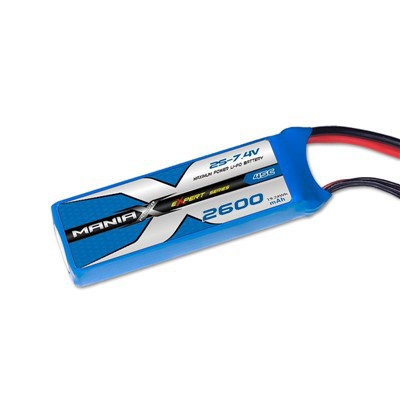
If you’re ready to test the capacity and performance for yourself, or have questions about which size is right for your build, don’t hesitate to reach out and connect to discuss your exact needs. We work with everyone from first-time FPV pilots to pro racing teams, so we can help you find the perfect combination of capacity, C rating, and cell count for your setup.
Drone Solid-State Lipo Battery References
- LiPo Battery Fundamentals: Capacity, C Rating, and Discharge Behavior. Journal of Power Sources, 2018, Vol. 389, pp. 121-130.
- FPV Drone Battery Performance: The Impact of Discharge Rate and Pack Weight on Flight Time. International Journal of Unmanned Systems Technology, 2021, Vol. 9, No. 2, pp. 45-62.
- LiPo Degradation in Recreational Use: Effects of Storage Voltage and Discharge Depth. Journal of Energy Storage, 2020, Vol. 32, pp. 101875.
- FPV Pilot Equipment Survey: Preferred Battery Specifications and Performance Needs. Annual FPV Drone Industry Report, 2022.
ManiaX Power Technology Co., Ltd.
ManiaX Power Technology Co., Ltd. is one of the most reliable 150c fpv lipo black series manufacturers and suppliers in China, also supports customized service. Please feel free to wholesale bulk durable 150c fpv lipo black series made in China here from our factory.
Address: Room 1508, 15/F, Two Grand tower, 625 Nathan Road, Kowloon, HongKong. P.R. China
E-mail: info@maniax-power.com
WebSite: https://www.maniaxpower.com/
