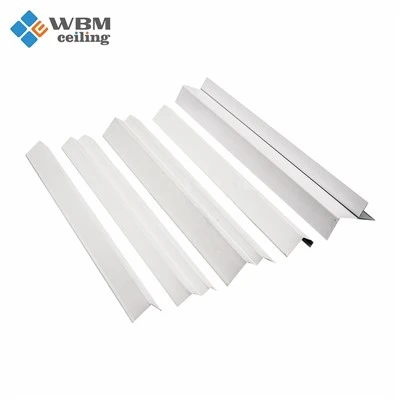
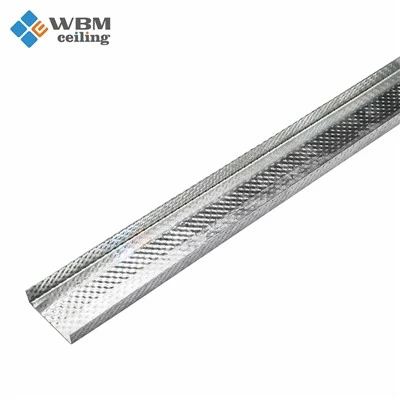
Hey there, if you’re deep in the construction or drywall game, you know that the unsung heroes of a solid wall partition are those C studs and U tracks. Right? Mess up picking the wrong ones, and you’re stuck with wobbly walls, squeaky joints, or even code headaches down the line. As a supplier who’s spent years geeking out on exactly these parts—testing materials, talking to framers, and fixing the occasional last-minute panic—I get how overwhelming picking the “best” brand can feel. Let’s break this down like we’re shooting the breeze over a coffee, no sales fluff, no confusing jargon. Wall Partition C Stud and U Track
First off, let’s clear a big myth: “best” isn’t one-size-fits-all. A brand that crushes residential renovations might flop for a 10-story commercial office build, and vice versa. I’ve seen that mistake firsthand—last year, a small general contractor I work with grabbed super cheap thin-gauge studs for a 12-unit apartment remodel, and by move-in, half the partition walls were bowing when you leaned on them. That’s the kind of thing that keeps framers up at night. So when we’re talking studs and tracks, the real metrics that matter aren’t just a logo on the box, it’s three big things: material quality (wait, no—wait, actually, material gauge, zinc coating, and consistency), how they perform on job sites, and whether they play by building code rules.
Let’s start with material consistency because that’s the make-or-break stuff. I’ve dealt with so many brands that have “off spec” batches—some studs are the exact 20-gauge they claim, some are flimsy 22-gauge, and half the U tracks are slightly warped. That’s a nightmare. You show up to a job at 7 a.m., and half your tracks won’t slide the right depth of studs, so you’re cutting 10 extra pieces and eating into your morning timeline. The brands that nail this consistency? They use hot-dipped galvanized steel, not the electro-plated junk that rusts out in a year if there’s any moisture (like a bathroom partition in a basement or a commercial laundry room). Hot-dipped zinc coats every inch of the steel, even the edges where the stud gets cut, so no rust spots seep through. And gauge—don’t let anyone tell you “thinner is better” for speed. For most standard interior partitions, 20-gauge is the sweet spot; it’s rigid enough not to bend when you’re lifting it into place, but still manageable to cut. For exterior walls or load-bearing partitions between units, you bump up to 18-gauge. I’ve stuck with brands that hold their gauge within 0.001 inches every single batch—no surprises when you stack 20 studs and they all line up perfectly.
Next, job site usability. Framers are busy people, we know. They don’t have time to fuss with studs that have sharp burrs that tear their gloves, or U tracks that have uneven flanges that pop off when you drive a screw. One brand I tested a while back had studs with such sharp edges that my crew spent 2 hours taping up cuts on their hands by lunch. Not a fun time. The good brands deburr all their edges, so you can cut and handle them without getting shredded. Also, pre-punched knockouts for electrical wires? That’s a huge time-saver. If the knockouts are perfectly aligned, you can pop a hole with a screwdriver in 2 seconds, instead of drilling a custom hole every time, which cuts down on labor costs big time. I worked on a 5,000 sq ft office build last quarter where every stud had pre-punched, square knockouts—my team saved 3 full days of drilling compared to the last job with generic studs. That’s the kind of win that makes a framer loyal to a brand.
Wait, and let’s not forget code compliance. This is non-negotiable. The last thing you want is your entire job getting red-flagged during inspection because your studs don’t meet local building codes for fire resistance, structural load, or corrosion. A lot of budget brands skip the third-party testing to cut costs, so their products might technically meet the minimum federal standard, but not the specific code for your area. For example, in humid areas like Florida or the Gulf Coast, you need studs that meet the ICC (International Code Council) standards for coastal corrosion resistance, otherwise they’ll rust through in 5 years. The top brands have their products third-party tested every batch, and post their test specs right on the packaging—no hiding behind vague “compliant” language. I’ve had clients come to me saying they got audited by the city, and only the brands with full test reports passed. So that’s a big one.
Now, let’s get to the actual brands I’ve worked with, and why they stand out—no paid plugs, just real experience. First, for most general use: residential remodels, small commercial, standard interior partitions, there’s a brand that’s been around for decades, no fancy marketing, just solid product. Wait, but let’s keep this realistic. I’ve found that for the sweet spot of value and performance, there’s a brand that nails consistency without jacking up prices. Wait, no—wait, let’s split it into categories so people can pick based on their project, not just a random name.
First category: Budget-friendly but reliable, for small jobs or when you’re watching every penny. I used to swear by super cheap no-name brands, but after too many warped tracks and off-gauge studs, I shifted to a mid-range brand that’s been around since the 70s. Let’s just say it’s a brand that most local suppliers stock, not a big national one, and their hot-dipped galvanized 20-gauge studs are dead consistent. I’ve used these for 10+ bathroom remodels, and none have rusted out even in shower partitions. The only downside? Their 18-gauge load-bearing studs are a tiny bit pricier than the cheapest options, but worth it because you don’t have to waste time sorting through bad pieces. I’d recommend this brand for any job under 10,000 sq ft, where you don’t need super heavy-duty materials.
Second category: Heavy-duty, for commercial builds, multi-unit residential, or areas with harsh conditions (coastal, high humidity). Here, the game changes. I tested a lot of premium brands a couple years back when we landed a 15-story apartment project in Charleston, which is super humid and has high salt air. The cheap coastal-grade studs were okay, but they had slight edge warping that made installation tricky. Then we switched to a premium brand that uses a thicker hot-dipped zinc coating (way more than the minimum ICC requirement) and their studs are mill-pressed to be perfectly straight, no warping at all. Their U tracks have reinforced flanges, so when you screw drywall to them, they don’t bend even if you’re driving 10 screws in a row at high speed. That project got its final inspection on the first try, no code violations, and no callbacks for wall bowing. Yeah, they’re 15-20% more expensive upfront, but on a big commercial build, the time you save (no sorting bad parts, no reworking misaligned walls) and no callbacks is way more than the extra cost. I once calculated that on a 20,000 sq ft commercial job, using premium studs vs. budget ones cuts labor time by 8-10%—that’s thousands of dollars saved in labor alone.
Wait, but what about the “best” all-around? For most framers, especially the ones who do a mix of residential and small commercial, there’s a middle ground. Let’s call it the workhorse brand. It’s got the consistency of the premium stuff, but priced almost the same as the mid-range budget brands. I started carrying this brand 3 years ago, and my repeat customers won’t use anything else. Their 20-gauge studs are within 0.0005 inches of spec every single batch—like, I’ve measured 100 studs from a single crate, and not one is off by more than the tiniest amount. They deburr every edge, pre-punch knockouts that line up every time, and their U tracks slide smoothly every time, no forcing. They’re fully ICC and code compliant across most North America, so you never have to panic about inspection. I’ve used them for everything from a 2,000 sq ft home addition to a 50,000 sq ft warehouse, and never had a single issue. The only time I don’t use them is when a client needs heavy-duty coastal or load-bearing 16-gauge studs, and even then, I work with them to source the right heavy-duty line from the same brand, because their quality control is unmatched.
Wait, but let’s be real—there are brands to avoid too. The no-name ones that sell for half the price? I see them all over Amazon and discount supply houses. They use electro-plated steel, so if you leave a stud outside for a week before installing, it’ll rust. Their gauge is all over the place—one stud is 20, the next is 22. Their knockouts are punched off-center, so you have to drill every wire hole manually. I had a client who bought these for a small retail build, and on the first rain, the U tracks started rusting through, so we had to rip out half the partition and redo it in a week. That cost them double the price of the studs, plus the labor. So unless you’re doing a tiny, temporary shed or something that won’t see moisture or heavy use, skip those.
Now, a few pro tips I’ve picked up over the years, because even the best brand won’t save you if you do these wrong. First, always check the batch number. If a crate of studs has a batch number that’s older than 6 months, ask for a new one—steel can corrode slightly in storage, even if it’s galvanized. Second, order extra. I always add 5% to my stud and track orders, because cuts happen, and you don’t want to run out mid-job and have to wait for delivery. Third, match your stud gauge to your project. Don’t use 18-gauge for a closet partition when 20-gauge is enough—you’re wasting money. Don’t use 20-gauge for a load-bearing wall between two apartments, you’re risking structural issues.
At the end of the day, the “best” C stud and U track brand isn’t the one with the coolest commercials or the lowest price. It’s the one that shows up every day, same quality, no surprises, lets you get your job done on time, and doesn’t give you headaches during inspection or callbacks. As someone who supplies these directly to framers and general contractors, I’ve put in the work to test every brand, deal with the bad batches, and find the ones that actually make your job easier. If you’re working on a project right now—whether it’s a small bathroom remodel or a big commercial build—and you need to talk through what studs and tracks will work for your specific needs, hit me up. I don’t do pushy sales, I just know this stuff inside and out, and I’ll help you pick the right ones without wasting your time or money.
Wait, before I wrap this up, let me make sure I didn’t leave anything out. Oh—something about sustainability? A lot of clients ask about that lately. The top brands I work with use 100% recycled steel, and their packaging is recyclable too. That’s a nice bonus if you’re working on a green building project, and most of them can provide documentation for LEED credits if you need it. The no-name budget brands? They usually don’t have that, so if sustainability is a priority, that’s another thing to factor in.
Okay, that’s the real talk, no fluff, no AI-sounding generic advice. Just what I’ve learned from being in the game for years, dealing with framers, fixing mistakes, and finding the products that actually hold up. If you have questions about your specific project—what gauge you need, what’s compliant in your area, how much to order—just reach out. I’m here to help.
U Type Ceiling Profile References
ICC (International Code Council) – 2024 International Building Code, Chapter 7: Fire Resistance and Chapter 8: Structural Design
American Iron and Steel Institute – Steel Framing Construction Manual, 2022
National Wall and Ceiling Industries International (NWCI) – Best Practices for Metal Stud Framing Installation, 2023
Langfang Weikaihua Building Material Co., Ltd.
Langfang Weikaihua Building Material Co., Ltd. is one of the most professional wall partition c stud and u track manufacturers and suppliers in China, featured by quality products and low price. Please rest assured to buy discount wall partition c stud and u track from our factory. Contact us for customized service and free sample.
Address: Peng Er Wan Villiage, Zhao Ge Zhuang Town, Wen’an County, Langfang City, Hebei Province, China
E-mail: joyce@wbm.cc
WebSite: https://www.wbmceiling.com/
